
A warm winter jacket needs to be good at trapping your body heat and at the same time limiting the amount of cold air that gets in. The amount of insulation matters, but how it’s distributed across the jacket can be just as important.
A jacket that’s warm on a quiet winter afternoon is likely to be a very different proposition when it’s below freezing and windy.
The insulating layer keeps the heat close to your body. In a down jacket, the clusters of fine feathers create a lot of small air pockets, which in turn reduce the rate of heat loss.
Goose down is used in high-end winter wear because it’s such a good insulator without being very heavy. It also compresses really well, so down jackets are easy to pack when you’re not wearing them.
The outer shell has a completely different job. It protects the insulation from the wind and moisture so that the down can maintain its loft.
Construction is the key to how well the materials work together. A jacket with plenty of insulation can still feel cold if air gets in around the neck or through the cuffs.
The warmest winter jacket isn’t necessarily the one that looks the thickest. It’s the one that’s going to keep you warm in the bits that are going to be most exposed to the cold.
Winter jacket specs are all about one number; generally, it’s either the fill power or the temperature rating.
Neither one tells you how the jacket will actually perform.
For example, a jacket with 900 fill power down isn’t necessarily warmer than one with 700 fill power down. The amount of insulating down inside each jacket is also an important factor.
Same with the temperature ratings. A jacket rated for -20°C (-4°F) may be perfectly adequate for a short stroll, but that doesn’t mean it’ll keep you warm if you’re standing outside for hours.
When you’re looking at jackets, look at the whole design rather than go on one headline spec.
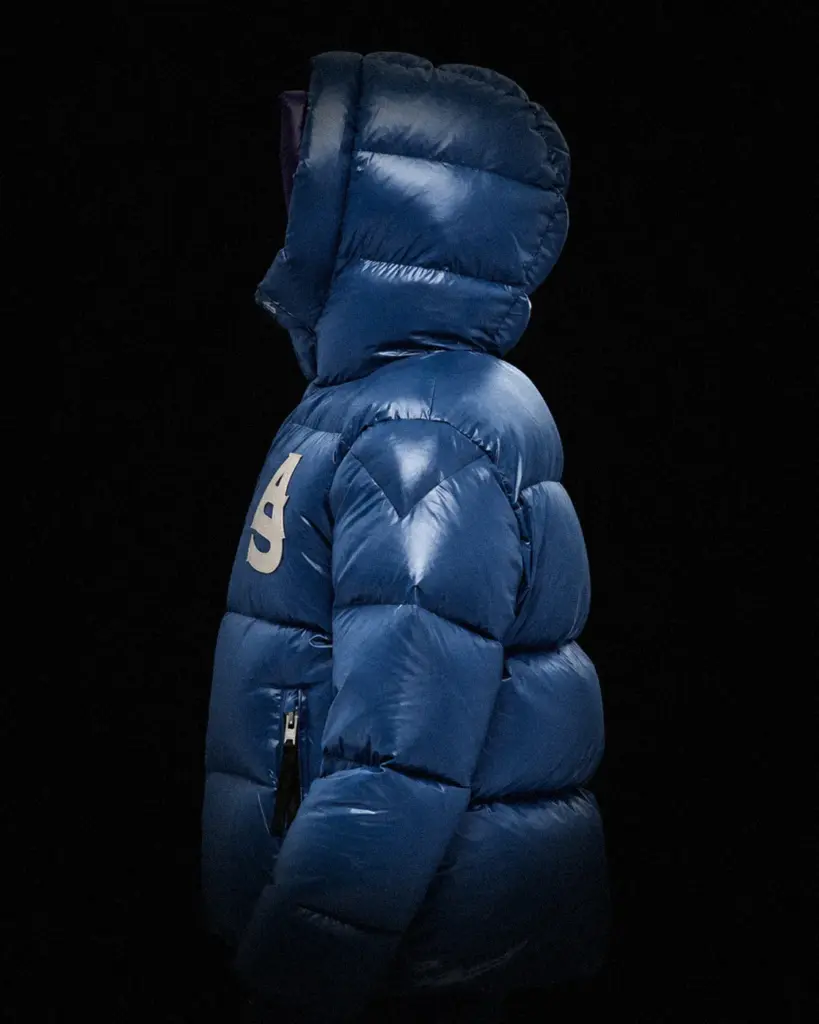
Fill power is a measure of how much space the down takes up when it’s fluffed out. Fill weight measures how much down is actually in the jacket.
These are different specs, and you can only compare winter outerwear properly if you understand both.
Higher fill power means the down will create more loft per unit of weight. Fill weight is the amount of insulation the manufacturer has used.
A jacket with lower fill power but more down could be warmer than a lighter jacket with a higher fill power rating.
A 700+ fill power rating means down with strong insulating efficiency, creating a lot of loft without being too heavy.
This is the bit that matters when you’re looking for the best puffer jacket in the game, one that gives you a huge amount of warmth without being at all bulky.
Here’s how common fill-power ranges compare:
| Fill Power | What It Means |
|---|---|
| 450–550 | Lower loft efficiency, often found in more affordable down jackets |
| 550–650 | Moderate loft efficiency for general winter outerwear |
| 650–750 | Good insulation efficiency and warmth-to-weight potential |
| 750–850 | High loft efficiency, often used in premium down jackets |
| 850+ | Very high loft efficiency, useful when low weight and packability matter |
A jacket with 700+ fill power can offer good cold-weather protection, provided it has sufficient insulation and is well constructed.
For the very cold conditions, you’ll want to look at both the warmth-to-weight ratio and the degree of coverage.
The KUDU Double Hood Down Jacket uses a 90/10 goose down and feather blend (90% down, 10% feathers).
The jacket also uses RDS-certified down (Responsible Down Standard), which adheres to animal welfare and supply chain traceability requirements.
RDS certification focuses on responsible sourcing. It doesn’t indicate how warm the jacket will be.
AlphaStyle’s KUDU range uses 700+ fill power in the models specified, offering efficient insulation for cold-weather wear.
The KUDU Gen Double Hood Puffer Jacket is a good example of the difference between fill weight and fill power. Its specs are:
This combination gives you far more information about potential warmth than fill power alone.
Actual performance still depends on how the insulation is distributed and the conditions you’re wearing the jacket in.
Baffle construction dictates how the down stays in place in a puffer jacket.
Without separate compartments, the insulation could shift around inside the jacket, leaving uneven coverage.
Baffles divide the insulation up into sections to help with the distribution of the insulation.
Two common designs are sewn-through baffles and box baffles.
Sewn through construction connects the outer fabric directly to the inner lining. It’s lightweight and fairly straightforward to manufacture, but the stitched areas have very little, if any, insulation.
Box baffle construction involves fabric walls between the inner and outer layers. This enables the insulation to take up a greater proportion of the jacket’s thickness and thereby reduces the thermal bridging.
Box baffles can help in very cold conditions, though how much they help depends on the overall design.
Poorly constructed winter jackets often have cold spots where the insulation is thin, squashed, or unevenly distributed.
Common problem areas include:
Check the spacing between the baffles before you buy.
Large, unevenly filled compartments can let the insulation shift, and narrow stitched channels can leave more areas with reduced coverage.
The jacket should also have enough internal room for the down to loft.
Even high-fill-power insulation loses effectiveness when it’s compressed.
The hood and jacket openings are very important in the prevention of heat loss.
A well-insulated body panel won’t do much for your comfort if cold air gets in around your neck and wrists.
The ideal cold weather jacket has a hood that fits well and doesn’t obstruct your vision. The collar should sit properly on your neck, and the cuffs and hem should be sufficient to stop any cold air from getting in.
A double hood design adds an extra layer of coverage around the head and neck.
When it’s been correctly designed and fitted, the inner hood can sit right up against the head, with the outer hood then providing the extra wind protection.
This layered approach can help to reduce the amount of exposure around the neck, though of course the actual level of wind protection will be down to the fabric and the fit.
A detachable hood gives you far more flexibility if the temperature changes.
The KUDU General 2.0 has a zip-detachable contrast inner hood and placket. You can remove the inner hood, leaving the outer hood in place.
You can wear the jacket with the full double hood or remove the inner hood for a different configuration.
This makes the jacket ideal for everyday winter wear, since you won’t need to change your whole outer layer.
Check the exact hood attachment system before buying, especially if you plan to mix and match components from different KUDU pieces.
Not every detachable hood is interchangeable with every jacket.
Heat can escape through surprisingly small openings.
Thumbhole cuffs and ribbed storm cuffs both help to keep the sleeves in place and reduce the amount of cold air that gets in at the wrists.
Selected Kudu jackets have ribbed storm cuffs with thumbholes to provide extra coverage at the point where the sleeve meets your glove.
An adjustable drawcord hem is another feature to look out for. You can tighten the hem to help reduce the draughts around the waist.
Longer jackets and parkas will also give you a bit more coverage around the hips and upper thighs.
In the severest cold, those details are absolutely critical when you’re out in the wind for long periods.
A water-repellent shell and a waterproof jacket are not the same thing.
Water-repellent fabrics will help to keep off light moisture, whilst waterproof fabrics are designed to be waterproof under the specified test conditions.
The difference is that down insulation loses its effectiveness when it gets wet.
A DWR coating (durable water repellent) causes water to bead up on the surface of the fabric rather than being absorbed immediately.
This can be of use in light rain or in the case of a short exposure to wet snow.
However, water repellency doesn’t mean it’ll keep you dry in the rain for any length of time.
The KUDU General 2.0 is a water-repellent nylon shell. It’s not designed to be fully waterproof, just resistant to light moisture.
For prolonged rain, look for a jacket with a published waterproof rating and protected seams.
You should also consider breathability, especially if you’re going to be walking fast or doing demanding outdoor activity.
If you’re using a down puffer in persistently wet conditions, it’s worth wearing a suitable waterproof shell over it (as long as the fit doesn’t compress the insulation).
The right fit lets your insulation work properly and gives you plenty of room to move.
A puffer jacket that’s too tight will compress the down fill. One that’s too loose will let cold air in.
The aim is to find a comfortable fit that takes your normal winter wear without restricting movement
A practical layering system starts with a base layer worn next to the skin.
Its primary function is to control moisture and help keep your skin dry.
Merino wool and moisture-wicking synthetics are the go-to options. Cotton is pretty much out as a fabric for long periods in the extreme cold, as it holds moisture.
A midlayer provides warmth under your jacket. Fleece or an appropriate insulated garment will do the job, depending on the coldness of the conditions and how active you’re going to be.
The outer puffer then forms the primary insulating barrier against the conditions.
When trying on a jacket, wear the layers you’ll use in winter.
Check that you can:
A jacket should also allow sufficient room around the torso for the down to maintain its loft.
Check the product measurements rather than go for the next size up.
AlphaStyle’s KUDU jackets come in a range of cuts and shapes, so the individual size chart is the best place to start.
The right winter jacket comes down to how long you’ll be out and what you’ll be doing.
A short city commute is quite different from a full day’s exposure in the winter.
For day-to-day urban wear, it’s often all about mobility and convenience.
A good insulating puffer jacket will be fine for walking between buildings or on the public transport.
A longer parka gives you more body coverage, which can be a real advantage if you’ll be standing outside for any length of time.
For winter hiking or remote environments, an expedition jacket is probably more appropriate. They’re designed for the longer exposure and have many more specialist protective features.
Winter jackets are for when you’re not always able to carry a bag or access your phone.
Practical storage options can make a real difference.
The Kudu collection is all about details that are designed around the way you move in your day-to-day life.
Interior backpack-style straps let you take the jacket doors and carry it over your shoulders.
This can be particularly useful when moving between the cold of the outdoors and the warmth of a heated building.
Selected KUDU designs also feature a transparent interior smartphone pocket with a touch-sensitive window.
You can operate the phone through the pocket (i.e., without having to take it out of the jacket repeatedly).
Soft-lined hand warmer pockets are another feature worth considering when you’re comparing winter outerwear.
These details have nothing to do with the jacket’s insulating value, but they will certainly make it more convenient to use day-to-day.
For any demanding outdoor activity you’re doing, weather protection and the ability to regulate your body temperature are the two things you need to prioritize over the convenience of the gear.
A temperature rating is the manufacturer’s stated rating of the conditions the jacket is designed to cope with.
Winter jacket ratings are completely different from the standardized temperature tests used for certain sleeping bags.
This makes any comparison between brands very difficult.
Two jackets advertised for the same temperature may provide very different levels of comfort.
A jacket advertised as being for -25°C (-13°F) is not guaranteed to keep you warm at that temperature.
Your experience depends on how long you’ve been out, what you’re wearing underneath, and how much heat your body is actually generating.
Wind chill is particularly important.
Strong wind increases heat loss from exposed skin and can make the areas around a jacket (if poorly protected) feel a lot colder.
Physical activity also affects warmth.
Walking generates more body heat than standing still. A jacket that’s perfectly comfortable on the walk may well be too thin to provide any meaningful insulation if you’re sitting outside for a long period of time.
Some manufacturers use terms like comfort rating, but you should only consider them comparable if they explain the test methodology.
AlphaStyle has published a warmth rating of -20C (-4F) for a particular KUDU Puffer. That’s a manufacturer’s rating, not an independently verified comfort guarantee for every KUDU jacket.
Always check the specs for the specific model and think about how you’ll use it.
For extended exposure to dangerously cold temperatures, select appropriate extreme-cold gear for the activity and conditions, not just the jacket’s advertised rating.
Before you buy, compare the features that have a bearing on insulation and weather protection.
The best winter jacket for extreme cold is the one that fits your actual conditions, not the one with the highest fill power in the advert.
| Feature | What to Look For | Why It Matters |
|---|---|---|
| Down fill power | 700+ is a strong option for efficient insulation | Indicates how much loft the down creates for its weight |
| Fill weight | A clearly stated amount in grams | Helps you understand how much insulation the jacket contains |
| Down blend | A high down percentage, such as 90/10 | Indicates the ratio of down clusters to feathers |
| RDS certification | Verified Responsible Down Standard certification | Addresses animal welfare and sourcing practices |
| Baffle construction | Evenly distributed insulation with suitable baffles | Helps reduce cold spots |
| Hood design | Secure coverage around the head and neck | Limits exposure to wind |
| Cuffs | Ribbed, adjustable or thumbhole cuffs | Helps reduce drafts around the wrists |
| Hem | A secure fit or adjustable drawcord | Limits cold air entering from below |
| Outer shell | Wind-resistant fabric and suitable moisture protection | Helps preserve insulating performance |
| Waterproof rating | Published test details when rain protection is required | Distinguishes waterproofing from basic water repellency |
| Fit | Room for winter layers without excessive looseness | Prevents insulation compression and unwanted drafts |
| Temperature rating | A stated rating with clear limitations | Provides context, but not a guaranteed comfort temperature |
| Practical features | Useful pockets and comfortable carrying options | Makes daily winter wear more convenient |
A 700+ fill power is a good starting point for an extreme-cold jacket, as it gives you good insulation for the weight. Higher fill power generally improves packability but doesn’t necessarily make the jacket warmer. How much down you’ve got, and the overall construction are equally important.
Fill power measures the loft of the down; fill weight measures how much down is in the jacket. Higher fill power means the insulation will loft more. More fill weight will give you more total insulation, though the actual amount of warmth you get will be dictated by the design of the jacket.
No. A water-repellent finish helps protect against light rain and light snow; but it’s not designed to be waterproof in sustained wet conditions. For consistently wet conditions, you need a waterproof shell with appropriate seam protection. Keeping your down insulation dry is obviously key to keeping warm.
Choose a rating that represents the conditions you’re likely to encounter, but don’t regard it as an absolute. Take into account wind exposure and the length of time you’ll be out in it. A manufacturer’s ‘warmest’ winter coat may still end up requiring you to wear some additional layers in the worst of conditions.
A winter jacket should sit comfortably over your normal base and mid layer without compressing the insulation. You should be able to move your arms freely, and the hem should be long enough to provide adequate coverage. The hood and cuffs should be sufficiently sized to keep the cold out.
A well-designed double hood can provide extra coverage around the head and neck. The benefit, of course, is down to how well each layer fits and how effective the outer fabric is at blocking the wind. Models with detachable inner hoods obviously provide a good deal of flexibility should the conditions change.
A good winter jacket starts with good insulation; the details around that insulation make the difference.
Look past the fill power and consider the quantity of down, how it’s secured, and how effectively the jacket will stop the wind from getting through.
Fit also matters. The jacket needs to be roomy enough for comfortable layering without being a huge, drafty thing.
AlphaStyle’s KUDU range takes all of that and brings it together in a distinctive double hood. The models in the range have different insulation ratings and removable elements.
Explore the KUDU puffer jacket collection to compare the available designs and find a jacket suited to your winter routine.

 11/11/2026Down Fill Power Explained: 600 vs 700 vs 800 FillRead more
 10/30/2026How to Layer for Cold Weather: The Complete Winter Layering GuideRead more
 10/15/2026Are Puffer Jackets Waterproof? Waterproof vs. Water-Resistant ExplainedRead more
 09/15/2026Crewneck vs Hoodie: Which One Actually Works for Riding?Read more
 08/12/2026A huge shoutout to Hypebeast CN for featuring the Alphastyle United Society collection!Read more
 07/31/2026United Society Resort Collection Shoot in Central, Hong KongRead more
 07/15/2026Introducing the “United Society” Resort Collection: A Vision of UnityRead more
 06/30/2026AlphaStyle Debuts New Resort Collection at Preservation HallRead more