
A puffer jacket can be waterproof, it just has to be designed that way.
Most of the standard puffers are designed as insulators for cold weather rather than as rain jackets. They generally have a nylon or polyester shell which will give you some degree of protection from the wet.
A puffer jacket can be rain repellent without being waterproof.
A waterproof puffer jacket will invariably have some form of waterproof membrane or coating and will be constructed in such a way as to be watertight (i.e. the fabric and all the vulnerable seams are sealed).
For day to day winter wear, that level of protection isn’t really necessary. A well insulated, water resistant puffer jacket will cope with cold commutes and a small amount of snow.
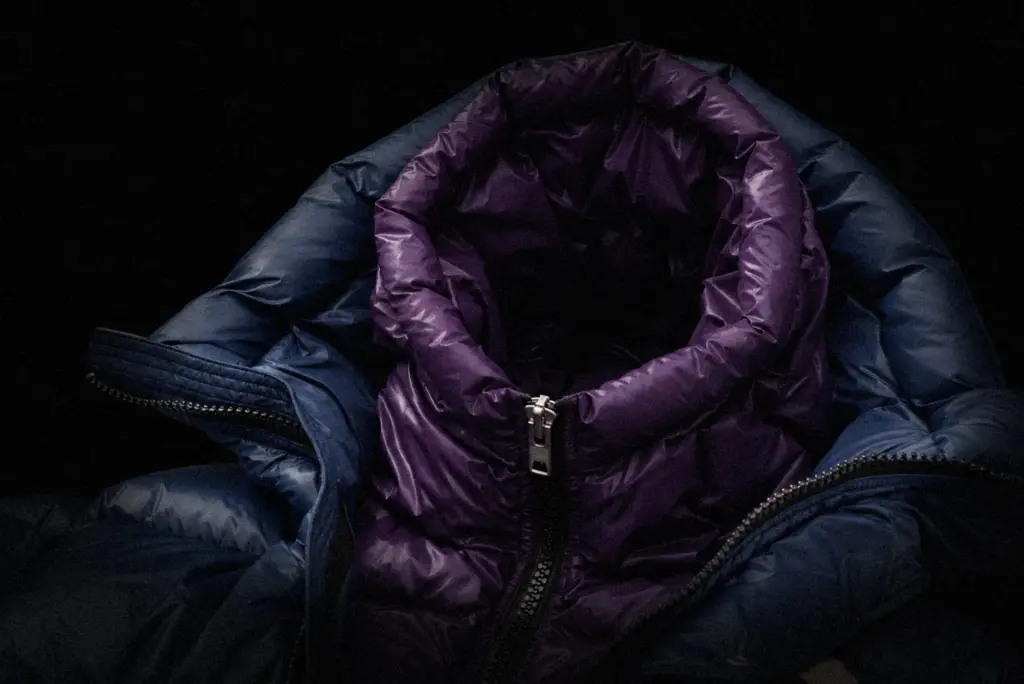
A waterproof jacket is one designed to prevent water getting through its construction under the specified test conditions.
It normally has a waterproof coating or a laminate membrane to keep the rain out. The seams are all sealed or taped over to stop water getting in at the stitching.
Some waterproof jackets will give you a hydrostatic head figure which tells you how much water pressure the fabric can take before it leaks.
Water resistant fabric will slow the ingress of water, but it doesn’t stop it absolutely under prolonged exposure.
A tightly woven nylon or polyester will hold up to a shower without the need for a waterproof membrane at all. Water will eventually get through the fabric though, especially if it’s under pressure or if it’s been wet for a longer period of time.
For everyday cold weather outerwear, water resistance is of use when you’ve got occasional rain rather than constant rain.
Water repellent fabric is designed so that water forms droplets and runs off the surface rather than soaking in straight away – like water off a duck’s back.
This is generally achieved via a durable water repellent (DWR) finish although in some cases the fabric itself will naturally shed water due to the way it’s constructed.
You’ll see the water beading on the jacket.
Water repellency doesn’t make a jacket waterproof. That’s just what the outer material does in terms of dealing with moisture. It doesn’t in any way guarantee that the jacket as a whole is waterproof.
The vast majority of puffers use nylon or polyester as their fabric because they’re light and provide a decent amount of wind resistance.
A tightly woven fabric will help to restrict the amount of moisture that gets through the outer layer. The outer material also has an effect on durability and breathability – that is to say how easily moisture vapour from your body is able to escape.
A DWR coating will cause water to bead and roll off the fabric before it has a chance to actually soak in.
This treatment makes a real difference during a light shower or a light snowfall. It wears off over time through normal wear and washing and so on.
DWR is also a surface treatment. It doesn’t, in any way, replace a waterproof membrane.
AlphaStyle’s KUDU Cozy is a water-repellent polyester shell with a matte finish. It’s designed for everyday cold weather use rather than for prolonged periods in heavy rain.
Even if the outer fabric is water resistant, moisture can get in at the seams.
Puffer jackets use a quilted construction to create what are known as baffles which hold the insulation in place. Depending on the construction, the stitching, and seams can create ingress points for water.
Waterproof outerwear deals with this by having sealed seams or taped seams which prevent moisture getting through the stitching.
Some designs incorporate protective features such as a storm flap over the zip. Adjustable cuffs and a drawcord hem can go some way to minimising the ingress of wind-driven rain through the openings, but they won’t make the jacket waterproof.
Down insulation works by trapping the air between the clusters of fine feathers and down. The trapped air is what provides the insulation and warmth.
When untreated, down gets saturated the clusters will clump together and lose their shape. This will result in a loss of loft and therefore less space to trap the warm air.
Once the down has been properly washed or dried in accordance with the care instructions for the garment it’s in, it can often regain its loft. The problem with leaving moisture trapped inside the jacket is that it can cause further issues.
Some technical jackets use hydrophobic down (the down has been treated to be hydrophobic) which will help to delay saturation. It doesn’t make the whole jacket waterproof, though.
Both natural and synthetic insulation have their benefits, but they behave in a very different way when they get wet.
For dry, cold conditions, down is a very good option. For consistently damp conditions though, a synthetic insulating material may be the better option.
AlphaStyle’s KUDU Double Hood Down Jacket is part of a range that focuses on down insulation with the distinctive double hood.
The right jacket is one that’s appropriate for the conditions you’re facing.
A short walk through a light shower has very different requirements in terms of outerwear to spending several hours out in the heavy rain.
Here’s a practical way to understand the protection you’ll need:

Product descriptions can tell you a lot about what a jacket is designed to do, provided you know which specs are important.
The terms ‘waterproof’, ‘water-resistant’ and ‘water-repellent’ should be considered.
A published waterproof rating gives you far more useful information than a general statement about being water resistant.
Look at the following details before choosing your next winter coat:
Don’t confuse a jacket’s temperature rating with its waterproofness. A puffer rated for very cold weather may well have very poor resistance to heavy rain.
A rain shell is important if you’re going to be in wet weather for any length of time.
A waterproof outer layer will stop the rain from getting to the insulation underneath. If you’re wearing a down puffer underneath then you need to make sure the shell has sufficient room to allow for the loft of the down without squashing it.
The combo can be useful in cold, wet conditions provided the layering system is sufficiently breathable.
AlphaStyle’s KUDU Stealth is a water-repellent puffer jacket using water-repellent matte polyester with 90/10 white goose down insulation. It has a detachable inner hood and a matching front panel so you can wear it in a number of different ways.
A puffer’s water repellent finish requires proper care if it’s to perform well.
Regular wear can have an effect on the ability of a surface treatment to shed water.
One of the signs that the finish needs fixing is when the water stops forming droplets and starts to soak into the fabric.
Start with the care label, as different shells and insulation types will require different cleaning methods.
A few general guidelines can help:
Yes, some waterproof puffers will have the insulation and waterproof membrane combined with sealed seams. Most standard down puffers, however, are just water resistant or water repellent rather than fully waterproof. Always check the specs of the product
Yes, a puffer without waterproofing can become saturated in the rain over a long period of time even if the outer fabric is water repellent. Once the insulation has taken on the water, it will lose its warmth and become a lot heavier.
Untreated down loses a lot of its insulating value when it’s saturated as the clusters collapse and can’t hold air any more. Hydrophobic treatments will improve the moisture resistance but they don’t get rid of that problem. Synthetic insulation generally performs better when wet.
There’s no fixed life for a durable water repellent. How long it lasts is down to how much it’s worn, how often it’s cleaned and the quality of the original finish. Once the water no longer beads, it’s time for the treatment to be maintained or reapplied.
A waterproof rain shell is the way to go if you’re likely to be in prolonged or heavy rain. For the occasional light shower or a bit of snow, a water-repellent puffer should be sufficient. Just make sure that an extra shell will fit over the insulation.
Follow the care label and don’t wash it unnecessarily. Keep the outer fabric clean and allow the jacket to dry properly after it has been wet. Where the manufacturer allows it, use a suitable reproofing product when the water repellency starts to break down.
Explore the AlphaStyle KUDU guide to learn more about the construction, or browse the KUDU puffer jacket collection to compare available styles.

 11/11/2026Down Fill Power Explained: 600 vs 700 vs 800 FillRead more
 10/30/2026How to Layer for Cold Weather: The Complete Winter Layering GuideRead more
 09/30/2026Best Winter Jacket for Extreme Cold: What to Look For in a Puffer JacketRead more
 09/15/2026Crewneck vs Hoodie: Which One Actually Works for Riding?Read more
 08/12/2026A huge shoutout to Hypebeast CN for featuring the Alphastyle United Society collection!Read more
 07/31/2026United Society Resort Collection Shoot in Central, Hong KongRead more
 07/15/2026Introducing the “United Society” Resort Collection: A Vision of UnityRead more
 06/30/2026AlphaStyle Debuts New Resort Collection at Preservation HallRead more