
A puffer jacket gets its name from the ‘puffed up’ sections which give it its character. This is all down to the quilted construction with the insulation between the outer and inner fabric.
The end result is a winter coat which will keep you warm without the need for any of the conventional heavy coat fabrics.
Most puffers share a few defining features:
Puffer jackets can go from a slim, lightweight type right through to the big, bulky winter coats with loads of padding.
Some have a very sporty outdoor look; others are more structured for a contemporary streetwear feel. The outer shape can be as varied as you like, but the principle is the same: it’s all about trapping the warm air in the insulation.
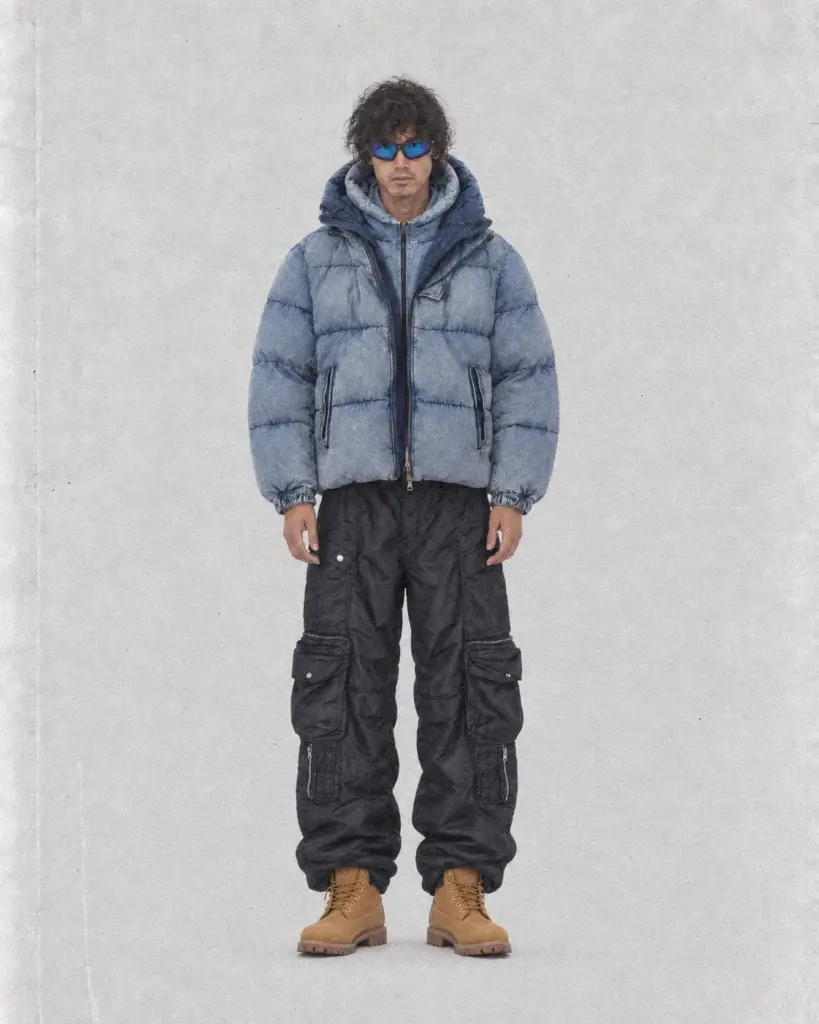
The raised sections on a puffer jacket are called baffles. They’re a big part of the jacket’s distinctive look, but their primary function is to manage the insulation.
Each baffle creates a compartment that holds the filling in place. As the insulation expands, it forms little pockets of air that slow the transfer of body heat to the colder air outside.
This extended structure is known as a loft.
The better the insulation maintains its loft, the better it will be at retaining the warm air. Without these compartments, the filling can migrate to the bottom of the jacket, leaving very poor insulation in other areas.
Not all baffles are the same.
Stitch-through construction joins the outer fabric directly to the lining, creating the visible stitched channels. It’s very common in lightweight puffers (though the stitching does create the odd thinner areas through which the heat can escape).
Box baffle construction uses fabric walls between the boxes to maintain a more consistent insulation depth. This reduces the incidence of cold spots but generally involves a more complex construction.
Baffle width also affects the way a jacket looks. Wide channels give a fuller silhouette; narrow quilting gives a much more ‘tucked in’ look.
Neither pattern, by itself, will guarantee greater warmth. The quantity of insulation within each compartment is by far the most important factor.
What are puffer jackets made of? Most are a combination of an outer shell, an inner lining, and an insulating fill.
Whilst the shell materials affect weather resistance, the fill has by far the greatest impact on how effectively the jacket will trap the heat.
Two main types of insulation are used in puffer jackets.
Down insulation comes from the soft, fluffy clusters of down underneath the outer feathers of a duck or a goose.
Unlike stiff feathers, these clusters have fine filaments that project outwards, creating a multitude of tiny air pockets. The result is a material which is an excellent insulator without being very heavy.
A goose down or duck down jacket will obviously give you a good deal of insulation and at the same time be quite light and fairly compressible.
When comparing down jackets, two specifications are particularly useful:
A jacket with 800 fill power isn’t necessarily warmer than one with 700 fill power. The 700 fill power jacket could well be warmer if it contains a lot more down.
Responsible sourcing also matters.
Look for RDS-certified down when you’re looking at animal-derived insulation. The Responsible Down Standard sets out animal welfare requirements and supply chain controls (including a ban on live plucking and force feeding).
AlphaStyle’s KUDU down jackets use RDS-certified insulation, with a number of the models having 700+ fill power and a 90/10 goose down to feather blend.
Synthetic insulation uses manufactured fibers (most commonly polyester) to create an air-trapping structure similar to that of natural down.
These fibers are arranged into sheets or clusters, which gives the jacket its padded shape.
One of the big advantages of polyester fill is that it maintains its insulating properties much better when wet. Untreated down collapses quite readily when it gets damp.
Synthetic puffers also tend to be cheaper than the equivalent premium down jackets.
However, you’re likely to achieve the same warmth with more material, which in turn makes the synthetic jacket heavier and/or less compressible.
Modern synthetic insulation has come on massively, and some of the more advanced stuff is absolutely superb in terms of the warmth-to-weight ratio.
For everyday winter clothing, the most useful distinction is how each type of insulation performs in the conditions you’ll actually be in.
The difference between a puffer and a down jacket is actually quite simple.
Puffer describes the jacket’s construction and shape. Down describes the insulation within it.
A jacket can be both.
The padded silhouette and insulated compartments identify it as a puffer.
The filling could be natural down, synthetic fibers, or a mixture of the two.
This means the term ‘puffer’ tells you nothing about how warm it will actually be or what it’s made from.
A lightweight synthetic puffer for cool autumn weather and a heavily insulated down puffer for freezing weather can look very similar.
Their performance may be very different.
What is a down jacket? It’s a jacket with natural duck or goose down as the insulation (regardless of the outer design).
Most down jackets are quilted or baffled, which also makes them puffers.
The key point is that ‘down’ refers to the fill, not the shape of the garment.
| Term | What It Describes | Insulation |
|---|---|---|
| Puffer jacket | A padded, quilted jacket style | Down, synthetic or hybrid |
| Down jacket | A jacket containing natural down | Duck or goose down |
| Synthetic puffer | A padded jacket with manufactured insulation | Usually polyester |
The most useful buying comparison is therefore down-filled puffers versus synthetic-filled puffers rather than treating down jackets and puffer jackets as two completely different things.
Both types of insulation work by trapping air, but they behave differently when wet and under repeated compression.
Here’s how they compare.
| Feature | Down-Filled Puffer | Synthetic-Filled Puffer |
|---|---|---|
| Insulation | Natural duck or goose down | Manufactured fibers, usually polyester |
| Warmth-to-weight ratio | Generally higher | Generally lower |
| Packability | Excellent | Good, but usually less compact |
| Wet-weather performance | Loses significant warmth when saturated | Retains more warmth when damp |
| Drying time | Usually longer | Usually faster |
| Price | Often more expensive | Often more affordable |
| Longevity | Can retain loft for many years with proper care | May lose loft faster after repeated compression |
| Best suited to | Cold, dry conditions and weight-conscious use | Damp weather and everyday practicality |
Neither material wins in every instance. The better one is going to be depends on the climate and the sort of protection you require.
The warmth-to-weight ratio measures how much insulation a material provides per unit of weight.
Natural down does very well in this instance.
Its fine clusters give you good loft with very little material. It’s very useful in a packable jacket where you’re likely to be carrying a lot of winter clothing, and you don’t want to add much weight.
Higher fill power means more loft per ounce of down. 800 fill power down will occupy more space than the same weight of 600 fill power down.
However, fill power measures efficiency rather than the total warmth of a finished jacket.
A thick synthetic puffer can be warmer than a thin down jacket, particularly if the synthetic is well insulated.
Shell design and the distribution of the insulation will also affect the outcome.
For buyers looking at two jackets, the combination of fill type and fill quantity is far more informative than a single impressive number on the label.
Moisture is where the differences become more apparent.
Untreated natural down loses a lot of its loft when it gets wet. The clusters clump together, and the air pockets that provide the insulation are all but gone.
Synthetic fibers, in general, will hold their shape better when wet and will retain some of their warmth.
Some of the premium down jackets use what’s known as hydrophobic down (the down has been treated to be hydrophobic). This will, of course, delay the onset of saturation; it won’t make the insulation waterproof.
The outer fabric provides an additional layer of protection.
A water repellent shell will have a DWR (durable water repellent) finish. This causes any light moisture to bead up on the fabric rather than actually soak in.
However, water repellent and waterproof are not the same thing.
For prolonged exposure to heavy rain, you’ll need a properly waterproof outer layer with appropriate seam construction. A basic puffer with a DWR finish won’t be sufficient.
Puffers aren’t the only winter coats built around insulation.
Parkas and quilted jackets will often use the same materials, but the way they’re constructed and the amount of coverage they provide can be very different.
A parka is essentially a longer, more protective winter coat, designed to cover more of your body.
Lots of the parkas go below the hips and have insulated hoods, so they’re useful for extended periods in the cold.
A puffer jacket generally has a shorter cut, though long puffers are by no means uncommon.
The two categories do overlap. A parka can be either down or synthetic with the same padded construction as a puffer.
A longer parka gives you more protection around the hips and upper legs. A shorter puffer, on the other hand, may offer more freedom of movement, particularly if you’re constantly getting in and out of the car.
For the extreme cold, a well-insulated parka can be a good option. A heavily insulated puffer will often beat a lightly padded parka.
A quilted jacket is one where the stitching holds the layers of fabric together.
That stitching could form diamonds, squares, or horizontal channels.
Many quilted jackets use very thin fill and look quite flat, so they’re really only suited to mild weather.
Puffer jackets tend to be all about the volume and loft, creating the raised sections that are the hallmark of a more insulated cut.
A quilted jacket can have a good deal of insulation in it; a lightweight puffer may have very little filling at all.
When you’re comparing the two, don’t just look at the quilting pattern; check the insulation specs.
Yes, puffer jackets are warm, as their insulation traps the air and stops the heat from escaping from the body.
However, not every puffer is built for the freezing temperatures.
A lightweight style is fine for a cool morning commute; a heavily insulated winter puffer is for much colder conditions.
The jacket is quite thick, which gives you a sense of the warmth it will provide, though thickness alone doesn’t guarantee warmth.
Several construction details affect how well a puffer performs.
Insulation quantity and quality: A jacket needs sufficient fill to provide good thermal insulation. For down jackets, both fill power and fill weight are important.
Baffle construction: good insulation distribution minimizes cold spots; stitching and the design of the compartments will affect where the heat can actually escape.
Shell fabric: a tightly woven nylon or polyester shell will help minimize wind penetration. Some shells will also have a water-repellent treatment for light moisture.
Fit and coverage: a jacket should allow plenty of room for layering without leaving big gaps through which the cold air can get. The hem length and sleeve coverage will affect how warm you are.
Hood and cuff design: Insulated hoods to protect the exposed areas, close-fitting cuffs to minimize drafts.
AlphaStyle’s KUDU Double Hood Down Jacket is a good example of how these considerations can impact a winter puffer.
It has a signature double hood: a two-layer design with an inner hood for a snugger fit and an outer hood for extra protection from the elements.
For the shopper comparing products, the temperature claim will need to be in context. The manufacturer’s temperature rating can be a useful guide, but no universal rating system tells you how warm the clothing will actually feel.
Wind exposure and an individual’s personal tolerance to cold will affect how a jacket feels at the same temperature.
The right puffer depends on where you’ll wear it and what you need it to do.
Start with your normal winter conditions rather than going purely by appearance or insulation specs.
For day-to-day city wear, a midweight puffer is often the way to go.
It should be sufficiently insulating to let you walk outside without feeling too restrictive indoors or on the move.
A more structured silhouette can work very well with technical streetwear too, particularly if the jacket is designed to sit over a hoodie.
In a fairly dry climate, down will provide a lot of warmth with very little weight.
For wetter conditions, synthetic insulation may be the more reliable option.
Outdoor use requires more attention to weather protection.
Long periods of inactivity in the cold generally require more insulation than active walking. On the other hand, if you’re exerting yourself a lot, you’ll sweat, so breathability and a moisture-wicking base layer are very important.
For travel, compressibility may be the key issue.
A lightweight down jacket will pack into a smaller space, though you should avoid prolonged compression during storage.
AlphaStyle’s KUDU Cozy 2-in-1 Puffer Jacket is a streetwear take on the puffer, featuring RDS-certified goose down and a matte, water-repellent polyester outer.
Its detachable inner hood also enables you to adjust the layered neckline for different looks.
A puffer’s look can tell you something about its design, but the specs tell you a hell of a lot more.
Use this checklist to compare jackets before buying.
For the buyer who wants a more understated look, the KUDU Stealth 2-in-1 puffer jacket utilizes a matte polyester shell with tonal details.
Its removable inner hood and matching front panel let the silhouette shift from a layered look to a much cleaner front profile.
These features make a real difference if you’re going to wear the same jacket all winter, rather than just using it occasionally for the odd bit of outdoor activity.

Not at all. The padding defines a puffer; the natural insulation defines the down jacket. Many down jackets are puffers, but some of the puffers will use synthetic fill. The terms can describe the same article of clothing, but they refer to different aspects.
Yes, a puffer jacket can lose warmth if the insulation is compressed or damaged. Down generally retains its insulating properties well if looked after properly, but it needs to be cleaned and dried correctly to restore the loft. Synthetic insulation can also flatten out after a lot of use/compression. Store your jacket loosely rather than leaving it in a tight pack for long periods. Always follow the care label.
The vast majority of puffer jackets have a nylon or polyester outer shell, a fabric lining, and an insulated fill. The fill is normally goose down, duck down, or synthetic polyester fibers. Some jackets have both types of insulation. Other features may include a detachable hood, adjustable cuffs, and a water-repellent outer shell. The exact materials will of course vary according to the manufacturer’s design.
Down generally wins on warmth-to-weight and is therefore very effective in cold, dry conditions. However, a very heavily insulated synthetic jacket can be warmer than a lightweight down jacket. Synthetic insulation also holds more warmth when wet. Compare the full jacket construction rather than assuming one filling is better than the other.
Yes, but performance depends on the fill and the shell fabric. Synthetic insulation generally holds its warmth better when wet, whereas untreated down loses its loft as it gets wet. A DWR-treated exterior will resist light rain; it won’t make the jacket waterproof. If your down jacket gets wet, then dry it out completely as per the care label before storing.
A well-made puffer jacket can easily last many years with proper care, though there is no set lifespan. Durability depends on the shell fabric and how often you wear it. Insulation care is also important. Natural down will maintain its loft for a long time; synthetic fill will gradually flatten with use. Don’t wash it unnecessarily; fix any small fabric damage as soon as you spot it, and when you’re not using it, store the jacket uncompressed.
A puffer has a padded, insulated construction. A parka is generally a longer coat, designed to cover more of the body. A parka can also be a puffer (if it’s using quilted insulation). For day-to-day mobility, the shorter puffer is often the way to go. For extended periods in severe cold, a longer insulated parka may be preferable for coverage.
Choosing between a puffer and a down jacket isn’t really an either/or situation. A puffer describes how the jacket is made; down is one of the materials used to keep you warm.
For cold, dry weather, down is extremely efficient at insulating and is very light. Synthetic insulation is worth looking at in the case of damp conditions.
AlphaStyle’s KUDU range takes the down puffer well beyond the realm of normal winter outerwear. It’s all about the AlphaStyle layered hood and the proportions that give you a genuinely more streetwear-appropriate look, while still delivering on the insulation front.
Explore the AlphaStyle KUDU Guide for a closer look at the collection’s construction and the designs behind its signature silhouette.

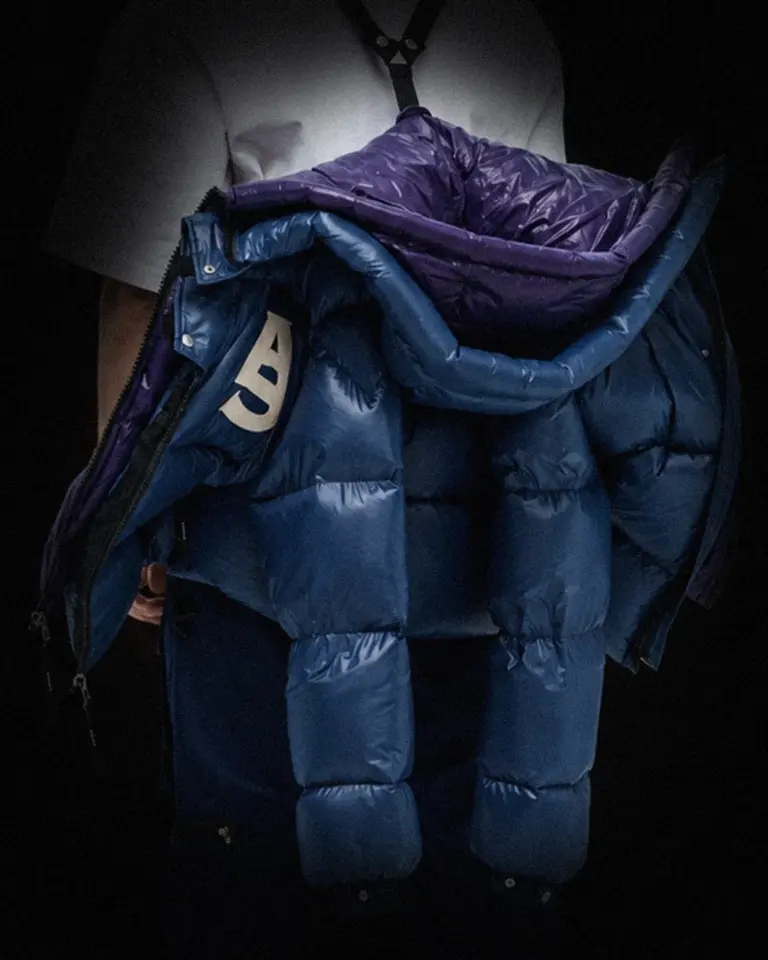 11/19/2026Goose Down vs Duck Down: Which Is Better for a Winter Jacket?Read more
 11/11/2026Down Fill Power Explained: 600 vs 700 vs 800 FillRead more
 10/30/2026How to Layer for Cold Weather: The Complete Winter Layering GuideRead more
 10/15/2026Are Puffer Jackets Waterproof? Waterproof vs. Water-Resistant ExplainedRead more
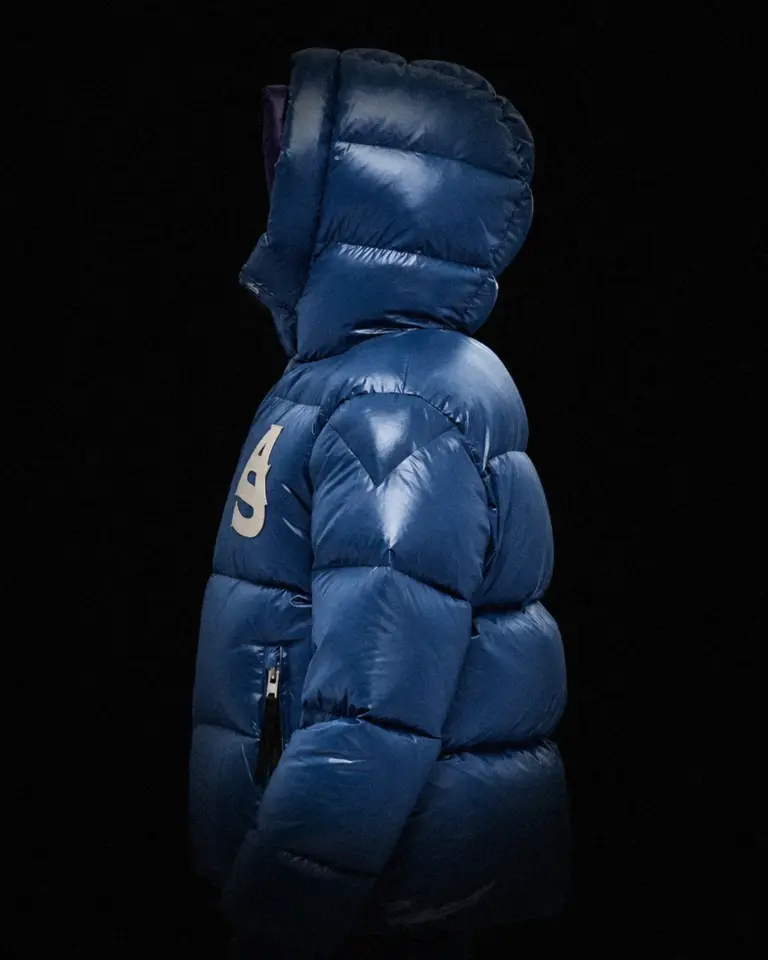 09/30/2026Best Winter Jacket for Extreme Cold: What to Look For in a Puffer JacketRead more
 09/15/2026Crewneck vs Hoodie: Which One Actually Works for Riding?Read more
 08/12/2026A huge shoutout to Hypebeast CN for featuring the Alphastyle United Society collection!Read more
 07/31/2026United Society Resort Collection Shoot in Central, Hong KongRead more